A new requirement for the $2,000 checks has emerged, prompting many people to pay closer attention as details continue to unfold, This update introduces additional steps that recipients may need to follow, creating both curiosity and concern about eligibility, timing, and how the process will ultimately work
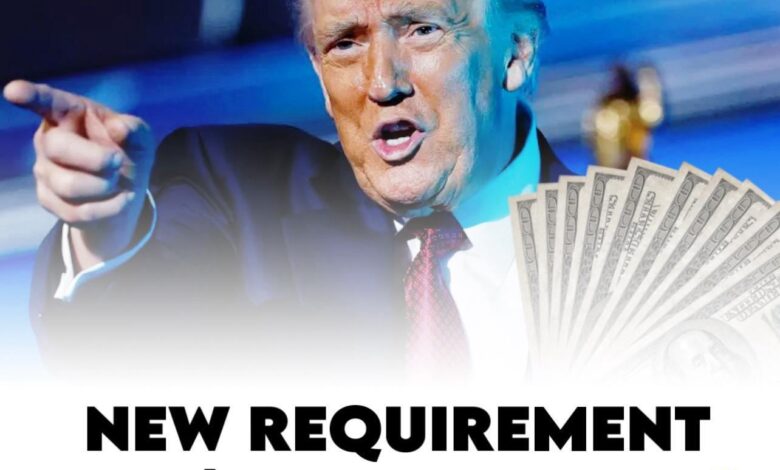
A new wrinkle in the fight over the proposed $2,000 relief checks has pushed the conversation into overdrive. What began as another round of political chatter suddenly turned into a genuine point of concern once word spread that new requirements could shape who qualifies, how the money is distributed, and when — or if — people will actually see it. The update didn’t come with much detail, but it came with enough uncertainty to make people stop scrolling and start paying attention. In a country running on economic fumes, ambiguity can feel like a threat.
Then came the moment that kicked the whole thing into the national spotlight: Donald Trump revived an old idea that had been buried under years of political noise — the so-called “tariff dividend.” After days of speculation and half-baked rumors circulating online, he finally confirmed it in a Sunday morning Truth Social post. Yes, he was calling for $2,000 payments. Yes, he intended them for every American. And yes, he claimed the funding would come from tariff revenue collected during his administration, especially tariffs imposed on China.
The post landed like a spark on dry brush. Supporters celebrated it as proof that Trump still saw ordinary Americans as his priority. They argued that tariffs weren’t simply taxes on imported goods but strategic weapons — a way to leverage America’s buying power against foreign competitors and reclaim economic ground for workers at home. In Trump’s framing, tariffs had always been investments, and now those investments were finally ready to pay out. The “dividend,” he said, belonged to the people.
For many struggling to keep up with rent, groceries, and insurance bills, the idea resonated instantly. The possibility of a direct infusion of cash — even one wrapped in political uncertainty — carried emotional weight. People talked about overdue medical appointments, car repairs they’d been putting off, weeks of groceries they could finally afford. No one pretended $2,000 would solve everything, but in a climate of relentless price increases, it sounded like oxygen.
But the pushback arrived just as quickly. Economists pointed out that tariff revenue doesn’t sit in a vault waiting to be mailed out to voters. Much of it is already tied to existing government obligations. Some questioned whether the revenue Trump referenced could realistically cover payments at the scale he implied. Others warned that tariffs often function like hidden taxes on consumers — raising the prices of imported goods and potentially offsetting the value of any one-time payout. In their view, calling it a “dividend” was more political theater than economic strategy.
Even so, critics couldn’t deny the effectiveness of the message. The promise of direct relief is powerful, and Trump knows how to tap directly into public frustration, especially when families feel the squeeze of inflation with no sign of relief from lawmakers.
As the debate grew louder, the conversation shifted. People weren’t just arguing about tariffs anymore — they were expressing something deeper. They were asking why financial relief always feels like a battle. Why support only arrives in crisis. Why programs meant to protect them come with requirements and hoops that feel designed to slow things down. The proposed new steps tied to the $2,000 payments — whatever they turn out to be — reignited old anxieties about eligibility thresholds, verification delays, and bureaucratic bottlenecks.
Would people have to submit new documentation? Would income caps tighten? Would the payments be automatic or require sign-ups? Would delays push everything into yet another election cycle promise? These were the questions dominating households long before policymakers had answers to give.
Amid the uncertainty, Trump’s framing struck a nerve for a reason: it made people feel seen. His message wasn’t just an economic argument; it was a symbolic one. He implied that the government owes something to its citizens — not as charity, but as a rightful share of national revenue. That language carried weight. It suggested Americans are stakeholders, not bystanders. And it positioned the “tariff dividend” not as a handout but as a return on investment.
Political analysts immediately started picking the message apart. Was this a teaser for a broader economic plan? A way to reassert dominance over tariff policy debates? A tactical move to redirect public frustration toward Congress? Whatever the motivation, the announcement forced the conversation back into the center of national attention.
At the heart of all this, however, are the people living paycheck to paycheck, the retirees adjusting to higher utility bills, the families choosing between groceries and prescriptions. They don’t want political theater. They want answers. They want stability. They want relief that doesn’t feel like a lottery. They want leaders who stop talking about hardship and start doing something about it.
Yet the proposal raised another uncomfortable truth: people no longer take government promises at face value. Each new pledge — no matter how dramatic — becomes a test of credibility. Americans have watched too many ideas die on the Senate floor, too many debates drown in filibusters and funding fights. They’ve absorbed enough political noise to know that announcements aren’t outcomes. Which is why so many reacted to Trump’s message with equal parts hope and skepticism.
Still, the emotional impact was undeniable. People are exhausted. They want to believe in something that helps. For some, Trump’s “dividend” proposal symbolized exactly that. For others, it highlighted how fragile economic security has become — that a single $2,000 check can spark nationwide anticipation. Either way, it exposed the same truth: Americans are hungry for a sense of fairness, a belief that the system can work for them instead of against them.
Even without firm details, the idea shifted public mood and political focus. It reignited discussions about national wealth, trade policy, and the responsibility leaders have to the people they represent. It also revealed something essential about the current moment — that trust has become a currency far more valuable than any check.
Whether the proposal survives or collapses under scrutiny, it touched something real. It forced the country to confront the gap between political promises and lived reality. It reminded people that relief, even hypothetical relief, carries emotional weight. And it underscored the fragile connection between policy, perception, and public faith.
In the end, Trump didn’t deliver checks with his announcement. He didn’t rewrite the budget or trigger automatic payments. But he did reopen a conversation America keeps circling back to: who benefits from the country’s economic strength, and who gets left holding the bill. The response to his message proved that people aren’t just waiting for money. They’re waiting for proof — proof that someone intends to deliver more than rhetoric.
And until that happens, every new proposal will keep testing the same thing: not the math, not the tariffs, but the trust of a nation trying to believe in the future it’s being promised.